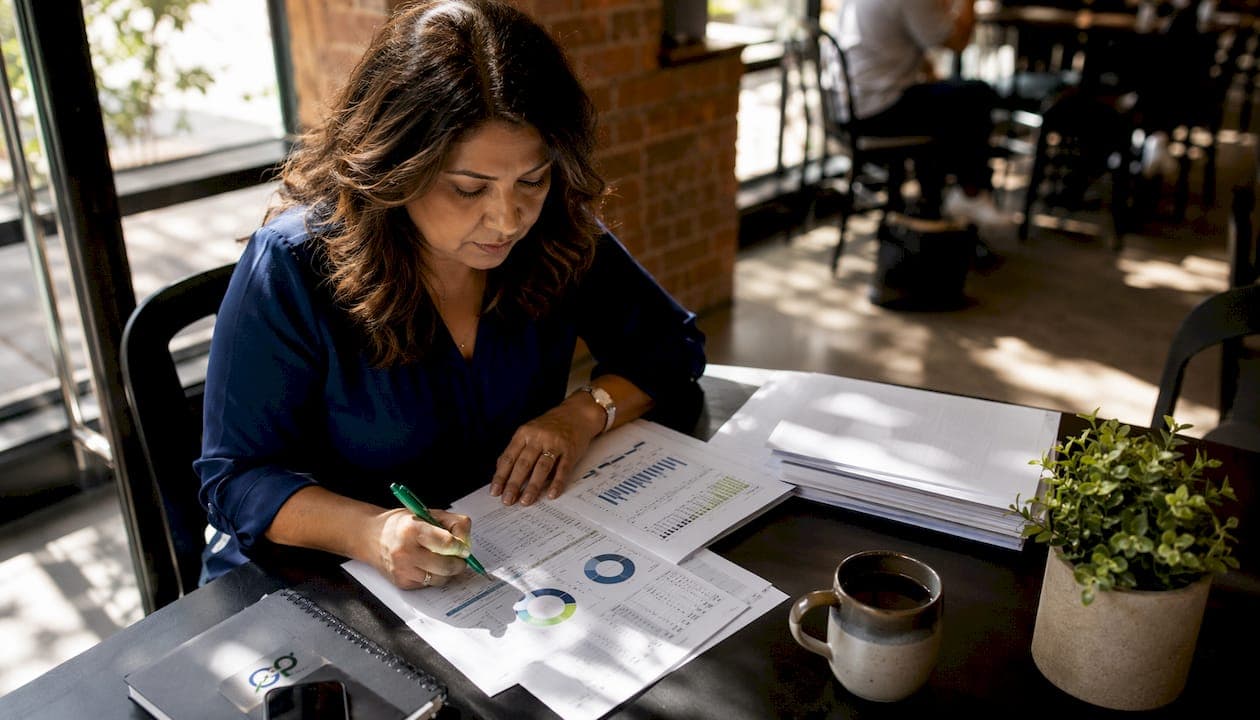
Why small business budgeting is your financial foundation
A business budget is an organized plan of expected revenue and expenses over a set period. It tells you where your money is coming from, where it's going, and what's left over. Think of it as your financial roadmap: without one, every spending decision is a guess.
For small business owners in Arkansas and across the U.S., separating business and personal finances is the first non-negotiable step. Mixing the two obscures your true costs and makes it nearly impossible to assess real profitability.
A solid budget delivers several concrete advantages:
- Monitors cash flow so you know when money is tight before it becomes a crisis
- Forecasts profit and loss by comparing projected revenue against fixed and variable expenses
- Supports investment decisions by showing you exactly how much capacity you have to hire, expand, or purchase equipment
- Identifies seasonal trends so slow months don't catch you off guard
- Keeps you compliant by accounting for tax obligations, payroll costs, and debt service
Table of Contents
- How to create an effective small business budget
- Key strategies to manage and review your budget effectively
- How expert bookkeeping and tax services strengthen your budget
- When and how to choose a budgeting coach or financial advisor
- Mygappro makes financial clarity achievable for small business owners
- FAQ
- Key Takeaways
How to create an effective small business budget
Building a budget from scratch feels daunting, but the process breaks down into clear, repeatable steps. Here's how to do it right.
-
Review your current financials. Pull at least 12 months of bank statements and income records. Look for patterns in revenue and spending before projecting anything forward.
-
Estimate your revenue. Add up all income sources, including sales, service fees, and any investment returns. Use gross revenue, not profit, as your starting figure.
-
Subtract fixed costs. Fixed costs stay constant regardless of sales volume: rent, insurance, loan payments, and salaried payroll. List every one and subtract the total from projected revenue.
-
Estimate variable expenses. These shift with your business activity: raw materials, shipping, utilities, and sales commissions. Review how they've fluctuated historically, then project forward conservatively.
-
Account for one-time expenses. Equipment purchases, software upgrades, or a new product launch all belong in the budget as separate line items so they don't distort your monthly picture.
-
Build a contingency fund. Setting aside around 10% of revenue for unexpected costs prevents emergency loans when equipment fails or inventory gets damaged.
-
Calculate your profit or loss. Subtract total expenses from total revenue. A positive number means profit; a negative number signals a need to cut costs or increase revenue.
-
Use accounting software. Accounting tools improve accuracy and support real-time tracking, making it far easier to catch discrepancies early.
-
Review and adjust regularly. Your budget is a living document. Set a monthly or quarterly review schedule and update figures as your business evolves.
Key strategies to manage and review your budget effectively
Creating the budget is step one. Keeping it accurate and useful over time is where most small business owners fall short.

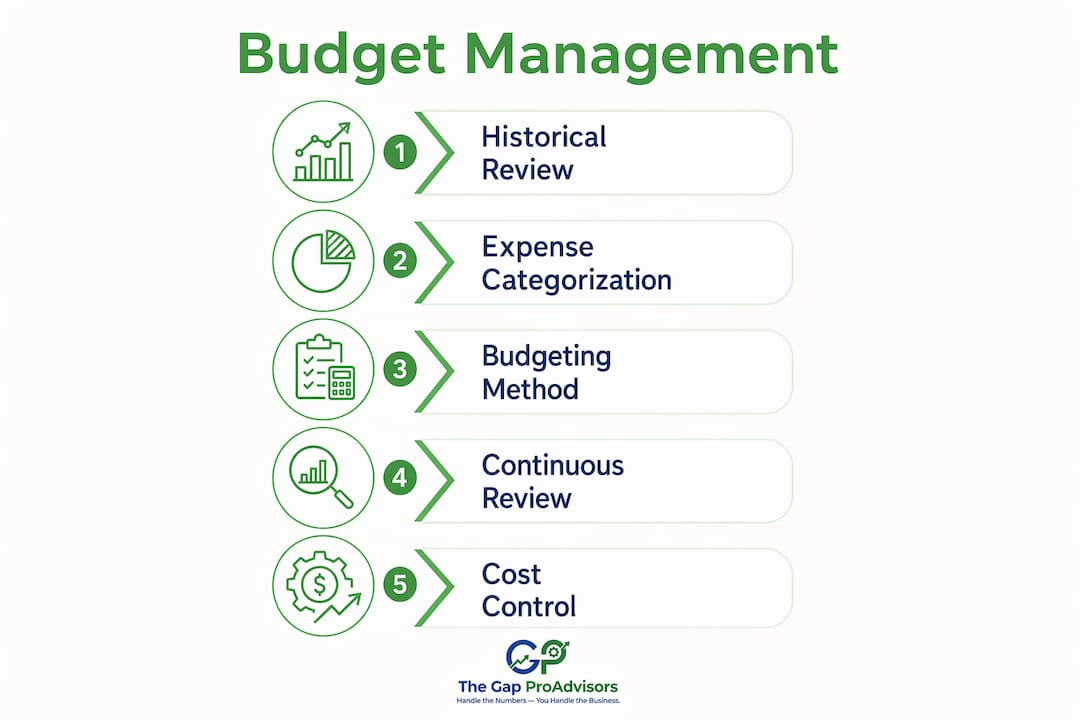
Distinguish fixed from variable expenses clearly. This distinction drives every cost-control decision you make. Defining costs by category with granular detail gives you precise control over where you can cut and where you should invest.
Choose a budgeting method that fits your business. The four main approaches are zero-based budgeting (start from zero each period and justify every expense), incremental budgeting (adjust last year's figures), flexible budgeting (adjusts with revenue changes), and fixed budgeting (set amounts regardless of performance). Zero-based works well for cost-cutting phases; incremental suits stable businesses with predictable expenses.
Treat your budget as dynamic, not static. Budgets should be continuous processes rather than annual tasks. Market conditions shift, clients come and go, and costs creep up. A budget reviewed only once a year is already outdated.
Apply the 70-20-10 rule for growth allocation. Direct 70% of income to daily operations, 20% to new opportunities or savings, and 10% to long-term growth investments. This framework keeps spending disciplined while protecting your capacity to scale.
Build and protect your contingency reserve. Unexpected costs are not exceptional; they're routine. A dedicated reserve line in your budget prevents one bad month from derailing your entire year.
Reduce costs without sacrificing growth. Audit subscriptions and vendor contracts annually. Renegotiate terms where possible. Cut spending that doesn't directly support revenue or customer retention.
Review budget versus actual expenses monthly. Catching a variance early gives you weeks to respond before it becomes a cash flow problem.
Pro Tip: Run a monthly "actuals vs. budget" comparison as a fixed habit, not an occasional check. This single practice uncovers cost creep and revenue shortfalls weeks before they threaten your cash position.
How expert bookkeeping and tax services strengthen your budget
A budget is only as reliable as the numbers behind it. That's where professional bookkeeping and tax services make a measurable difference.
Bookkeepers handle day-to-day transactions while CPAs and tax advisors provide strategic planning and compliance support. Together, they give you clean, current records that reflect your actual financial state, not an estimate or a best guess.
Professional financial support delivers specific advantages for budgeting:
- Clean records that reflect actual revenue and expenses, not approximations
- Tax preparation and planning that identifies deductions and prevents compliance surprises
- Payroll integration so labor costs are always accurately captured in your budget
- QuickBooks Online support to keep your accounting system organized and current
- Separation of business and personal finances maintained with discipline and accuracy
- Proactive insights from advisors who flag trends before they become problems
Maintaining strict financial separation between business and personal accounts is a principle that applies across business structures. It prevents misinterpretation of profit and supports sustainable growth. Mygappro's bookkeeping and tax services are built around exactly this discipline, giving Arkansas small business owners accurate, up-to-date records year-round.
When and how to choose a budgeting coach or financial advisor
Not every small business owner needs a full-time CFO. But there are clear signals that professional guidance will pay for itself quickly.
Signs you need professional support:
- Your finances are growing more complex (multiple revenue streams, employees, inventory)
- You're entering a growth phase and need to allocate resources strategically
- You've missed tax deadlines or received IRS notices
- You're unsure whether your business is actually profitable
- You want to plan for a major investment but don't know if the numbers support it
What to look for in a budgeting coach or advisor:
- Demonstrated experience with businesses in your industry and revenue range
- Clear communication style that helps you understand your own numbers
- A track record of proactive advice, not just reactive problem-solving
- Familiarity with tax planning alongside budgeting, since the two are inseparable
- Transparent pricing with no surprise fees
How engagements typically work: Most professional advisors offer monthly retainers for ongoing bookkeeping and financial review, one-time packages for budget setup or cleanup, and tax preparation as a standalone service. Mygappro's budgeting coaching service is structured to fit small business needs, with options for one-time budget builds or ongoing monthly support.
Evaluating cost versus value: The right advisor pays for themselves through tax savings, avoided penalties, and better spending decisions. When evaluating cost, compare it against what a single missed deduction or a cash flow crisis would actually cost your business.
Mygappro makes financial clarity achievable for small business owners
Running a small business in Arkansas means wearing a lot of hats. Managing your own books, tracking every expense, and staying on top of tax deadlines shouldn't have to be one of them.
Mygappro offers remote bookkeeping, tax preparation, payroll processing, and budgeting coaching specifically for small business owners across the U.S. Everything runs through a secure online portal, so you get accurate, up-to-date financials without scheduling an in-person appointment. Many clients have saved thousands in taxes through tailored planning strategies, and they gain the confidence to make real business decisions backed by real numbers. If you're ready to take control of your finances, schedule a free consultation with Mygappro today.
FAQ
What is the first step in creating a small business budget?
Start by reviewing at least 12 months of financial records to identify your actual revenue and expenses. This historical data forms the foundation for every projection you make going forward.
How often should I review my business budget?
Monthly reviews are the standard for most small businesses, with quarterly deep-dives for trend analysis. The more variable your cash flow, the more frequently you should check actuals against your plan.
What is zero-based budgeting for a small business?
Zero-based budgeting starts your budget at zero each period, requiring you to justify every expense from scratch. It's especially useful during cost-cutting phases or when you're restructuring your finances.
How much should I set aside in a contingency fund?
Setting aside a contingency fund of revenue for unexpected costs is a widely recommended starting point. This reserve covers equipment failures, inventory issues, or sudden revenue drops without forcing you into emergency borrowing.
Can Mygappro help me build a business budget?
Yes. Mygappro offers dedicated budgeting coaching alongside bookkeeping and tax services, giving small business owners a complete financial support system tailored to their specific situation.
Key Takeaways
A well-maintained business budget is the single most reliable tool for keeping your finances stable and your growth decisions grounded in real data.
| Point | Details |
|---|---|
| Separate finances first | Mixing business and personal accounts obscures true costs and distorts your budget from the start. |
| Build a contingency fund | Setting aside around 10% of revenue protects you from unexpected costs without emergency borrowing. |
| Review actuals monthly | Comparing actual results to your budget each month catches cost creep and cash flow issues early. |
| Choose the right method | Zero-based, incremental, and flexible budgeting each suit different business stages and goals. |
| Mygappro supports your budget | Mygappro provides remote bookkeeping, tax planning, and budgeting coaching to keep your numbers accurate year-round. |