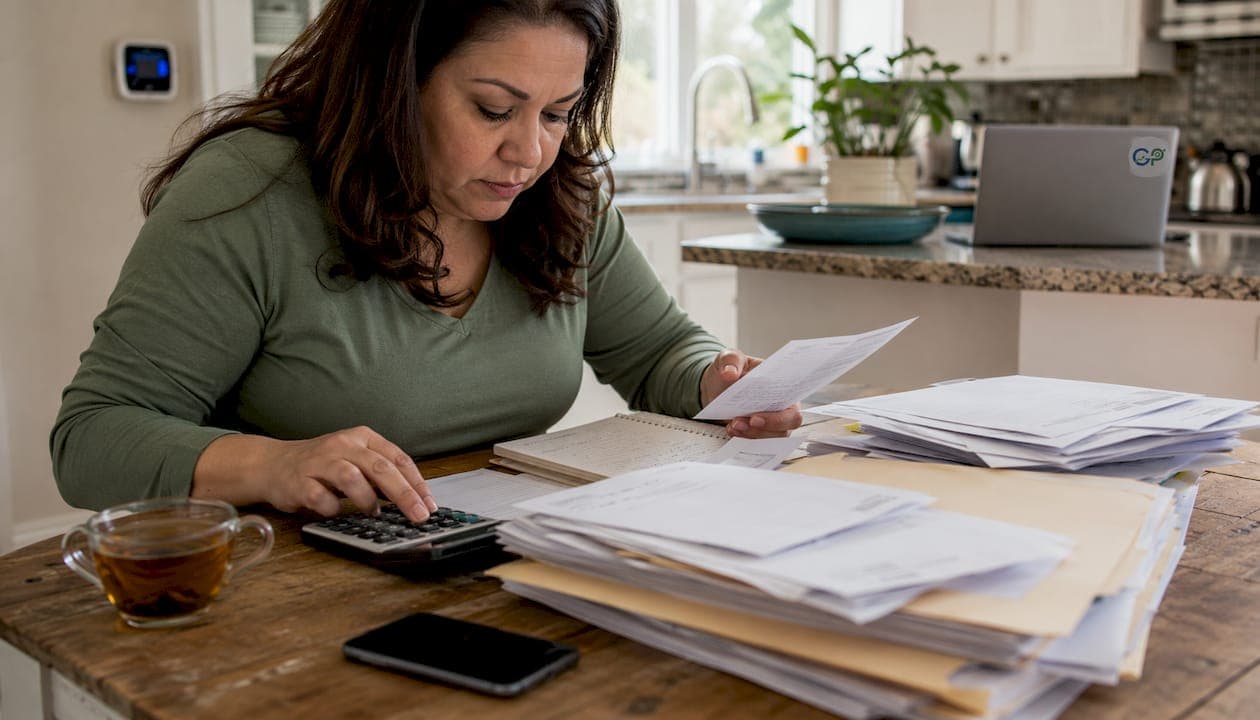
Before you open a single tax form, collect these 10 document groups: income records, expense receipts, payroll files, contractor records, bank statements, prior-year returns, asset schedules, inventory counts, tax IDs and entity details, and state/local registration documents. Once you have those in hand, your immediate next step is to reconcile your bank statements against your profit-and-loss report, then decide whether you're filing with DIY software or handing the package to a tax professional. The IRS Taxpayer Advocate Service identifies poor recordkeeping as the leading cause of filing delays, and the U.S. Small Business Administration confirms that state and local obligations require separate registration on top of your federal return. Start here.
Your 10 document groups at a glance:
- Income records (invoices, 1099s, merchant summaries, cash receipts)
- Expense receipts (vendor invoices, bank/card statements, contracts)
- Payroll files (W-2s issued, quarterly 941s, annual Form 940)
- Contractor records (1099-NECs issued, W-9s collected)
- Bank and credit card statements (all accounts, full year)
- Prior-year tax returns (federal and state)
- Asset schedules (purchase invoices, depreciation records)
- Inventory counts (beginning and ending, valuation method)
- Tax IDs and entity details (EIN, legal name, entity type, accounting method)
- State and local registration documents (sales tax permits, employer accounts, business licenses)
Table of Contents
- Your complete business tax checklist, organized by category
- Why your business identity and tax classification matter
- What income documents do you actually need to collect?
- Which expense records do you need, and what counts as a deduction?
- Payroll records and contractor reporting: what you must file
- Fixed assets, depreciation, and inventory: what to document
- Deadlines, estimated taxes, and what prep actually costs
- State and local tax obligations you need to verify
- How to organize your records and how long to keep them
- Key IRS forms and authoritative resources you should have ready
- How The Gap ProAdvisors prepares your tax file
- Key Takeaways
- What most small business owners get wrong about tax prep
- Ready to hand off the tax prep work?
- Useful sources
- FAQ
Your complete business tax checklist, organized by category
Work through each category below before you sit down with software or a preparer. Check off each item as you gather it.
1. Business identity and tax information
- Legal business name and any DBA (doing business as) name
- Employer Identification Number (EIN) or SSN if you're a sole proprietor with no employees
- Business address and state of formation
- Entity type: sole proprietor, partnership, S corp, C corp, or LLC with its tax election
- Accounting method: cash or accrual
- Tax year: calendar year (January–December) or fiscal year with start/end dates
- State employer account numbers and sales tax permit numbers
2. Income records
- All 1099-NEC and 1099-MISC forms received
- 1099-K forms from payment processors (PayPal, Stripe, Square, etc.)
- Merchant and credit card processor annual summaries
- Bank deposit records for all business accounts
- Point-of-sale reports and daily cash sales logs
- Invoices issued and accounts receivable aging report
- Records of any PPP loan forgiveness or EIDL grant received during the tax year
3. Expense records
- Vendor invoices and receipts (organized by category)
- Bank and credit card statements for all business accounts
- Canceled checks and ACH payment confirmations
- Contracts and subscription invoices (software, rent, insurance)
- Mileage log (date, destination, business purpose, miles driven)
- Meal receipts with business purpose and attendees noted
- Home office measurements and total home square footage (if claiming the deduction)
- Travel receipts: airfare, hotel, ground transportation, conference fees
4. Payroll and contractor records
- W-2s issued to all employees
- Payroll register (summary of wages, taxes withheld, employer contributions)
- Quarterly Form 941 filings (or Form 944 if annual filer)
- Annual Form 940 (FUTA)
- State unemployment insurance filings and payment confirmations
- EFTPS deposit records for all payroll tax payments
- Form W-9s collected from all contractors paid $600 or more
- 1099-NEC forms issued to contractors
5. Assets, depreciation, and inventory
- Purchase invoices for all equipment, vehicles, and improvements placed in service
- Prior-year depreciation schedules
- Section 179 election documentation
- Records distinguishing repairs (deductible) from capital improvements (depreciable)
- Beginning and ending inventory counts
- Inventory valuation method documentation (FIFO, LIFO, or specific identification)
- Supplier invoices supporting cost of goods sold
6. Estimated tax payments and deadlines
- Copies of all quarterly estimated tax payments made (Form 1040-ES or 1120-W vouchers)
- Dates and amounts of each payment
- IRS EFTPS payment confirmations
7. State and local taxes
- State income or franchise tax account numbers and prior filings
- Sales tax collected by period and proof of remittance
- Exemption certificates received from customers
- State payroll withholding and unemployment insurance payment records
- Local business license renewal documentation
8. Credits and incentives
- Documentation for the Small Business Health Care Tax Credit (Form 8941)
- R&D credit records: qualified research expenses, contractor agreements, employee time logs
- Energy-efficiency improvement records (if applicable)
- Any state-level credit documentation required by your state revenue department
9. Prior-year returns and reconciliations
- Federal and state returns for the prior two years
- Prior-year balance sheet and trial balance
- Any IRS or state correspondence, notices, or audit letters
10. Post-filing follow-up items
- Copy of filed return (federal and state)
- Proof of payment for any balance due
- Audit correspondence folder (keep separate and labeled)
- Calendar reminders for next year's quarterly estimated tax due dates
Storage tip: Scan everything and store it in a secure cloud folder or a dedicated client portal. A single labeled folder per tax year, with subfolders matching the categories above, means you can hand a complete package to any preparer in minutes.
Why your business identity and tax classification matter
IRS guidance is clear: the form of your business determines which federal taxes apply and which returns you file. Get this wrong and you're filing the wrong form, missing a deadline, or triggering an unnecessary notice.
Your entity type controls everything downstream. A sole proprietor reports business income on Schedule C of Form 1040 and pays self-employment tax via Schedule SE. A partnership files Form 1065 and issues Schedule K-1s to each partner. An S corporation files Form 1120-S and also passes income through to shareholders' personal returns. A C corporation files Form 1120 and pays tax at the entity level. An LLC's treatment depends entirely on its tax election, so confirm that election before you assume which return applies to you.
Your accounting method matters just as much. Cash-basis businesses recognize income when received and expenses when paid. Accrual-basis businesses recognize both when earned or incurred, regardless of when cash changes hands. That distinction affects which year's income and expenses land on your return, especially if you have outstanding invoices or unpaid bills at year-end.
Checklist items to confirm:
- Legal name matches your EIN registration exactly (IRS records must match)
- Entity type and tax election are documented (LLC operating agreement or S corp election letter)
- Accounting method is consistent with prior years (a change requires IRS approval)
- Tax year is confirmed: calendar or fiscal, with the correct start and end dates
Pro Tip: Confirm your EIN on the IRS website at irs.gov/businesses or by calling the IRS Business & Specialty Tax Line at 800-829-4933. For your state employer account number, check your state's department of labor or revenue portal. Do this before filing, not after, because a mismatched EIN on a return triggers an automatic processing delay.
What income documents do you actually need to collect?
Every dollar your business received during the year needs a paper trail. That means more than just the 1099s that land in your mailbox.

Start with your 1099s: 1099-NEC for nonemployee compensation, 1099-MISC for rents and royalties, and 1099-K from payment processors. Then pull your merchant processor's annual summary, which shows gross sales, refunds, and processing fees separately. Your bank deposit records come next. The reconciliation step is simple but powerful: total all deposits across your business accounts for the year, then compare that number to your gross receipts report from your accounting software. Any gap is either missing income or a deposit you need to explain (a loan, an owner contribution, or a transfer).
Required income documents:
- All 1099-NEC, 1099-MISC, and 1099-K forms received
- Merchant/credit card processor annual summary
- Bank deposit records for every business account
- Point-of-sale reports and daily cash sales logs
- Invoices issued and accounts receivable aging report
- Records of PPP loan forgiveness or EIDL grants (these have specific reporting requirements and may affect deductible expenses)
A note on PPP and EIDL: if your business received a PPP loan that was forgiven, that forgiveness is generally excluded from federal gross income, but the deductibility of expenses paid with forgiven funds has specific rules. Some states treat forgiven PPP loans differently. Confirm the treatment with your preparer and document the loan amount, forgiveness date, and expenses covered.
Pro Tip: Run a simple reconciliation before your tax appointment: export your total bank deposits for the year from your bank's online portal, then pull your gross receipts total from QuickBooks or your accounting software. If those two numbers don't match within a few dollars, find the difference before your preparer does. It saves time and avoids questions that slow down your filing.
Which expense records do you need, and what counts as a deduction?
The IRS expects documentation that shows the amount, date, place, and business purpose of every deduction you claim. "I paid for it" is not enough without a receipt or statement to back it up.
Cost of goods sold
If you sell products, COGS is your single largest deduction. You'll need supplier invoices for all purchases, your beginning and ending inventory counts, and records of any labor directly attributable to production. The formula is straightforward: beginning inventory plus purchases minus ending inventory equals COGS.
Meals and travel
Meals are generally 50% deductible for business purposes. Keep the receipt, note the business purpose, and record who was present. Travel expenses (airfare, hotel, ground transportation) are fully deductible when the primary purpose is business. Mixed personal/business trips require you to allocate costs proportionally.
Home office
You can use either the simplified method ($5 per square foot, up to 300 square feet) or the actual expense method (a percentage of home expenses based on office square footage divided by total home square footage). The actual method requires more documentation but often produces a larger deduction.
Vehicle expenses
Two options: the standard mileage rate or actual vehicle expenses. The standard mileage rate requires a mileage log with date, destination, business purpose, and miles for each trip. Actual expenses require receipts for gas, insurance, repairs, and depreciation records. You must choose a method in the first year you use the vehicle for business, and switching later has restrictions.
Common traps to avoid:
- Mixing personal and business expenses on the same card (creates reconciliation headaches and audit risk)
- Missing itemized receipts for meals over $75 (a credit card statement alone is not sufficient)
- Claiming 100% business use of a vehicle without a mileage log to support it
- Deducting non-deductible items like commuting costs or personal clothing
Pro Tip: Use your accounting software's bank rule feature to auto-tag recurring expenses by category as they import. Spend 15 minutes each month reviewing the tags. That one habit eliminates most of the categorization work at year-end and keeps your expense records IRS-ready year-round.

Payroll records and contractor reporting: what you must file
Federal employment taxes cover three obligations: Social Security and Medicare taxes (FICA), federal income tax withholding, and federal unemployment tax (FUTA). Each has its own form and deposit schedule.
Payroll documents to collect
- W-2s issued to every employee (copies for your records)
- Payroll register showing gross wages, taxes withheld, and employer contributions by pay period
- Quarterly Form 941 filings (or Form 944 if you're an annual filer with a small payroll)
- Annual Form 940 for FUTA
- State unemployment insurance filings and payment confirmations
- EFTPS deposit records for every payroll tax payment made during the year
Contractor 1099 reporting: step by step
- Identify every contractor or vendor paid $600 or more during the year for services.
- Confirm you have a completed Form W-9 on file for each one (name, address, TIN).
- Prepare Form 1099-NEC for each qualifying contractor.
- File 1099-NECs with the IRS and send copies to contractors by January 31.
- File Form 1096 (the transmittal summary) with paper 1099s, or use an e-file service if filing electronically.
If you missed the January 31 deadline, file as soon as possible. Late penalties increase the longer you wait, and the IRS does match 1099s against contractor returns. If you failed to withhold backup withholding when required (because a contractor didn't provide a W-9), document your remedial steps and consult a tax professional about the exposure.
Fixed assets, depreciation, and inventory: what to document
Assets your business owns and uses for more than one year are generally depreciable rather than immediately deductible. The exception is Section 179, which lets you elect to expense qualifying assets in the year they're placed in service, up to the annual limit set by the IRS.
| Asset Category | Typical Tax Treatment | Key Documents Needed |
|---|---|---|
| Office equipment (computers, printers) | Depreciable (5-year MACRS) or Section 179 | Purchase invoice, date placed in service |
| Vehicles (business use) | Depreciable (5-year MACRS) or Section 179, subject to luxury auto limits | Purchase invoice, mileage log, business-use percentage |
| Software (off-the-shelf) | 3-year MACRS or Section 179 | Purchase invoice, license agreement |
| Leasehold improvements | Depreciable (15-year MACRS under TCJA) | Contractor invoices, lease agreement |
| Furniture and fixtures | Depreciable (7-year MACRS) or Section 179 | Purchase invoice, date placed in service |
| Repairs and maintenance | Immediately deductible (if not a capital improvement) | Invoices, description of work performed |
Asset and inventory records to collect:
- Purchase invoices for every asset placed in service during the year
- Prior-year depreciation schedules (your preparer needs the running totals)
- Section 179 election documentation from prior years
- Written support distinguishing repairs from capital improvements
- Beginning and ending inventory counts with dates
- Documentation of your inventory valuation method (FIFO, LIFO, or specific identification)
- Supplier invoices used to compute cost of goods sold
Deadlines, estimated taxes, and what prep actually costs
Key federal deadlines
- January 31: W-2s and 1099-NECs due to recipients and IRS
- March 15: S corporation (Form 1120-S) and partnership (Form 1065) returns due
- April 15: Sole proprietor (Schedule C) and C corporation (Form 1120) returns due; first quarterly estimated tax payment due for the current year
- June 16, September 15, January 15: Remaining quarterly estimated tax due dates
- October 15: Extended deadline for individual and S corp returns (if extension filed by March/April 15)
When are estimated taxes required?
The IRS operates on a pay-as-you-go system. If you expect to owe $1,000 or more in federal tax after subtracting withholding and credits, estimated tax payments are generally required. Use Form 1040-ES (individuals and sole proprietors) or Form 1120-W (C corporations) to calculate each quarterly payment. The safe harbor rule: pay either 100% of last year's tax liability or 90% of this year's liability, whichever is smaller, to avoid underpayment penalties.
What does tax prep actually cost?
For a sole proprietor with clean books and straightforward income, DIY software typically runs $50–$200 for the federal return plus state filing fees. A tax professional charging hourly rates generally bills $150–$400 per hour; a fixed-fee engagement for a small business return commonly runs $500–$2,500 depending on complexity. Add payroll, inventory, multi-state activity, or a books-cleanup project, and costs rise accordingly. Messy books are the single biggest driver of higher prep fees because the preparer is doing bookkeeping work, not just tax work.
Pro Tip: This week, export your year-to-date profit-and-loss statement and trial balance from your accounting software and reconcile every bank account through December 31. Handing a preparer a reconciled set of books instead of a shoebox of receipts can cut your prep bill by several hours.
State and local tax obligations you need to verify
Federal filing is only part of the picture. SBA guidance is explicit: state and local tax obligations often require separate registration and reporting, and they depend on your location and business activity. Assuming your federal return covers everything is one of the most common and costly mistakes small business owners make.
Florida has no state personal income tax, which simplifies things for sole proprietors and S corp shareholders. But Florida does impose a corporate income tax on C corporations and certain LLCs taxed as corporations, administered by the Florida Department of Revenue. Florida also has a robust sales and use tax system: if you sell taxable goods or services, you're required to register, collect, and remit sales tax to the state. Failure to remit collected sales tax is treated seriously by the Florida DOR.
State and local obligations vary significantly across the country. Tennessee, for example, applies a separate business tax based on gross receipts with different thresholds for state and city levels. California's Franchise Tax Board has its own filing requirements, deductions, and credit rules, including specific guidance on PPP loan forgiveness treatment. Whatever state you operate in, check directly with that state's department of revenue.
Documents to gather for state and local compliance:
- State income or franchise tax account number and prior state returns
- Sales tax collected by filing period and proof of remittance to the state
- Exemption certificates received from customers claiming sales tax exemptions
- State payroll withholding account number and quarterly filing confirmations
- State unemployment insurance payment records
- Local business license and any city or county tax registration documents
Check the SBA's state tax guidance for links to each state's revenue department. For Florida-specific obligations, go directly to the Florida Department of Revenue at floridarevenue.com.
How to organize your records and how long to keep them
The IRS Taxpayer Advocate Service recommends tracking gross receipts, inventory, and expenses year-round, not just at tax time. A simple folder structure makes that habit easy to maintain.
Recommended digital folder structure for each tax year:
/2025-Tax-Year/01-Identity-and-Formation//2025-Tax-Year/02-Income//2025-Tax-Year/03-Expenses/(subfolders by category: meals, travel, office, vehicle, etc.)/2025-Tax-Year/04-Payroll//2025-Tax-Year/05-Assets-and-Depreciation//2025-Tax-Year/06-Prior-Year-Returns//2025-Tax-Year/07-State-and-Local//2025-Tax-Year/08-Correspondence-and-Notices//2025-Tax-Year/09-Filed-Return-and-Proof-of-Payment/
Retention periods (IRS baseline):
- Tax returns: keep permanently, or at minimum 7 years
- Supporting documents (receipts, invoices, bank statements): 3 years from the filing date for most returns; 6 years if you underreported income by more than 25%
- Employment and payroll records: 4 years after the tax is due or paid
- Asset records: keep for the life of the asset plus 3 years after you dispose of it (depreciation records must support every year's deduction)
- Corporate records and formation documents: permanently
For QuickBooks Online users, protecting your data with a dedicated QuickBooks backup solution is worth doing before tax season, since QBO does not provide a full data export by default. A backup means your records are safe even if you switch software or lose access to your account.
Pro Tip: Set a recurring calendar reminder for the last business day of each month. Spend one hour: reconcile your bank accounts, review expense categories, and file any new receipts into the correct folder. That monthly routine means your year-end package is 90% ready before January arrives.
Key IRS forms and authoritative resources you should have ready
The IRS maps required forms by entity type. Here's what most small businesses need:
- Schedule C (Form 1040): Sole proprietors report business profit or loss here
- Schedule SE (Form 1040): Self-employment tax calculation for sole proprietors and partners
- Form 1065: Partnership annual return of income; generates Schedule K-1s for each partner
- Form 1120-S: S corporation income tax return; generates Schedule K-1s for shareholders
- Form 1120: C corporation income tax return
- Form 941: Quarterly employer's federal tax return (payroll taxes)
- Form 940: Annual federal unemployment (FUTA) tax return
- Form 1099-NEC: Reports nonemployee compensation paid to contractors
- W-2: Reports wages paid to employees
- Form 1040-ES: Quarterly estimated tax payment vouchers for individuals and sole proprietors
All forms and instructions are available at irs.gov/businesses. Download the current-year version directly from the IRS, not from a third-party site, to make sure you have the right version.
Quick actions before you file:
- Print or save the instructions for every form you'll use (instructions change year to year)
- Confirm which forms require third-party filing services (1099-NEC e-filing is required for 10 or more forms starting with the 2023 tax year)
- Flag any form where you need a third-party document (W-2 from a payroll provider, 1099-K from a processor) and confirm you've received it
How The Gap ProAdvisors prepares your tax file
The Gap ProAdvisors collects, reconciles, and packages your year-end tax file so you arrive at filing with fewer surprises and more confidence. The process starts with a books review: every account is reconciled, income is matched against 1099s and bank deposits, and expense categories are confirmed. From there, the team handles payroll reconciliation, 1099-NEC preparation and filing, and the full tax return preparation, whether that's a Schedule C, an S corp return, or a partnership filing.
What clients gain working with The Gap ProAdvisors:
- Accurate, reconciled books delivered before the filing deadline
- 1099 compliance handled end-to-end (W-9 collection, form preparation, IRS filing)
- Deduction review to catch missed categories before the return is filed
- Payroll tax reconciliation confirming deposits match quarterly 941 filings
- A clear, organized tax package you can reference for future years
The firm's tax preparation services cover the full range of small business returns, and the small business accounting services page details monthly bookkeeping packages for owners who want year-round support rather than a once-a-year scramble.
Key Takeaways
A complete annual tax checklist covers 10 document categories, and the single highest-impact step you can take right now is reconciling your bank accounts and exporting your year-end profit-and-loss before you open a single tax form.
| Point | Details |
|---|---|
| Collect 10 document groups first | Income, expenses, payroll, contractor records, bank statements, prior-year returns, assets, inventory, tax IDs, and state registrations. |
| Entity type drives your forms | Sole proprietors file Schedule C; partnerships file Form 1065; S corps file Form 1120-S; C corps file Form 1120. |
| Estimated taxes are required if you'll owe $1,000+ | Pay quarterly using Form 1040-ES or 1120-W to avoid underpayment penalties. |
| State obligations are separate from federal | Florida imposes corporate income tax and sales tax; check the Florida Department of Revenue for your specific obligations. |
| Mygappro handles cleanup through filing | The Gap ProAdvisors reconciles books, prepares 1099s, and files returns so owners spend less time on paperwork and more time running their business. |
What most small business owners get wrong about tax prep
Tax season stress is almost always a recordkeeping problem in disguise, not a tax knowledge problem. The owners who arrive at their preparer's desk with a complete, reconciled package pay less in prep fees, claim more deductions (because they have the documentation to support them), and face fewer notices. The ones who show up with a year's worth of unsorted receipts and three bank accounts that haven't been reconciled since March pay for the cleanup first, then pay for the return.
The other thing most articles won't tell you: the deductions you miss are rarely exotic. They're the mileage log you didn't keep, the home office you didn't measure, the contractor you paid $800 in cash and never issued a 1099 for. Those aren't complicated tax strategies. They're documentation habits. Build the habit, and the deductions follow.
One more thing worth saying plainly: state and local obligations catch Florida business owners off guard more often than federal ones. Florida's lack of a personal income tax creates a false sense of simplicity. But if you're selling taxable goods or services, you have a sales tax obligation. If you have employees, you have a state unemployment insurance obligation. Those don't go away because you filed your federal return on time.
Ready to hand off the tax prep work?
Pulling together a complete tax package takes time you probably don't have. Mygappro offers a done-for-you path: bookkeeping cleanup, payroll reconciliation, 1099 preparation, and full tax return filing, all handled remotely through a secure online portal. No scheduling conflicts, no driving to an office, and no last-minute scramble because your books weren't ready.
The bookkeeping and tax services at The Gap ProAdvisors are built specifically for small business owners who want accurate financials and a filed return without spending their evenings on spreadsheets. Pricing is straightforward: one-time cleanup fees for catch-up work, monthly subscription packages for year-round bookkeeping, and fixed-fee tax preparation so you know the cost before you commit. Start with a free QuickBooks Online health check to identify any bookkeeping issues before they inflate your prep bill, then schedule an intake to hand off the rest.
Useful sources
- IRS Business Taxes: Download current-year forms, instructions, and guidance on which taxes apply to your entity type.
- IRS Gather Your Documents: A quick-reference list of documents needed for individual and self-employed filers.
- Taxpayer Advocate Service: Small Business Filing and Recordkeeping Requirements: Authoritative guidance on recordkeeping obligations and filing requirements by entity type.
- SBA: Pay Taxes: Federal and state tax obligation overview with links to state revenue departments.
- Florida Department of Revenue (floridarevenue.com): Florida-specific guidance on sales tax, corporate income tax, and employer withholding registration.
- Mygappro service pages: Tax preparation and bookkeeping and payroll services for owners who want professional help preparing and filing.
FAQ
What documents do I need for a small business tax return?
Collect income records (1099s, bank deposits, merchant summaries), expense receipts organized by category, payroll files (W-2s, Form 941, Form 940), contractor records (1099-NECs, W-9s), asset schedules, inventory counts, and prior-year returns. State registration documents and estimated tax payment records round out the package.
When are small business tax returns due?
S corporations and partnerships file by March 15; sole proprietors and C corporations file by April 15. Extensions are available but do not extend the time to pay any tax owed. Quarterly estimated tax payments are due April 15, June 16, September 15, and January 15.
Do I have to issue 1099-NECs to contractors?
Yes, if you paid a contractor $600 or more for services during the tax year, you must issue a 1099-NEC by January 31 and file a copy with the IRS. Collect a completed Form W-9 from every contractor before you pay them to avoid backup withholding complications.
How long should I keep my business tax records?
Keep tax returns permanently, or at minimum 7 years. Supporting documents (receipts, invoices, statements) should be kept for at least 3 years from the filing date, or 6 years if you underreported income by more than 25%. Asset records must be kept for the life of the asset plus 3 years after disposal.
Can Mygappro handle my bookkeeping cleanup and tax filing together?
Yes. The Gap ProAdvisors offers bookkeeping cleanup, payroll reconciliation, 1099 preparation, and full tax return filing as a combined service. Start with a free QuickBooks Online health check to assess where your books stand, then schedule a tax-prep intake to hand off the full package.